


Paul Signac
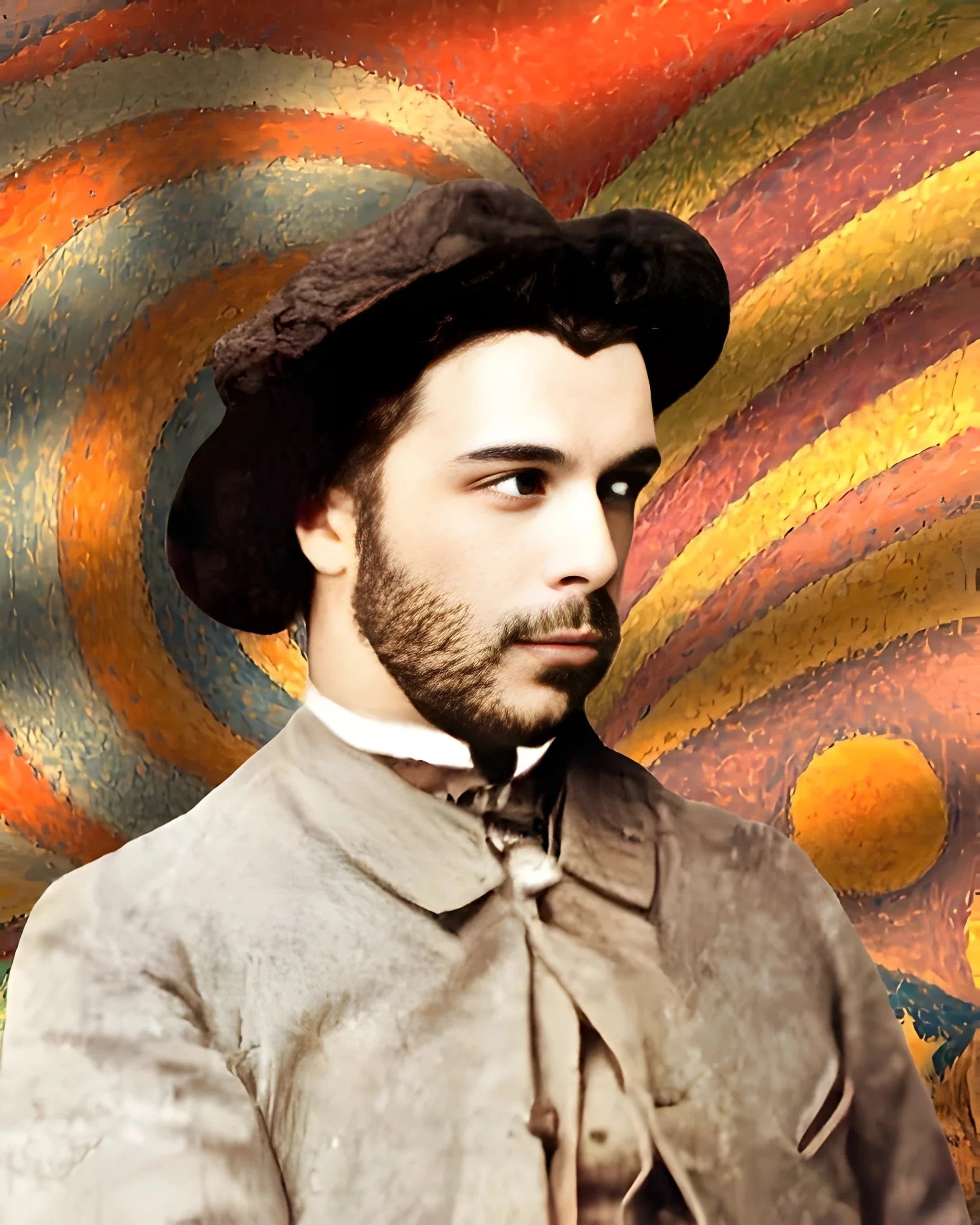
Paul Victor Jules Signac, born on November 11, 1863, in Paris and deceased on August 15, 1935, in Saint-Paul-de-Vence, was a French painter who played a fundamental role in the development of Pointillism alongside Georges Seurat. The only child of Jules Signac and Hélène Deudon, he grew up in a liberal, secular bourgeois household shaped by the rationalist and humanist ideals of the Third Republic. From an early age, he displayed a reflective and disciplined temperament, and his family supported his artistic vocation. He married Berthe Roblès in 1892, and later maintained a relationship with the painter Jeanne Selmersheim-Desgrange, with whom he had a daughter, Ginette Signac. His life unfolded between Paris—where he had a studio on the Boulevard de Clichy—and Saint-Tropez, where he established his seaside workshop on the Quai de Suffren.
Intellectually committed to libertarian ideals, Signac conceived art as an expression of freedom and harmony. In his work, he perfected the method of Pointillism, based on the application of small dots of pure color that, when optically blended in the viewer’s retina, produced a more luminous and balanced effect. Inspired by the color theory of Michel-Eugène Chevreul, Signac sought to unite science and sensitivity in a form of painting governed by optical laws and rational principles. This methodical and analytical technique aimed not only to represent light but also to translate emotion through chromatic order and visual harmony.
Although initially influenced by Impressionism and figures such as Claude Monet, the evolution of his style toward Pointillism marked a new direction in modern art, influencing movements such as Cubism and Futurism. His theoretical reflections, articulated in his treatise “D’Eugène Delacroix au néo-impressionnisme” (1899), established the foundations of modern painting based on the scientific harmony of color and the creative independence of the artist.
Signac contributed not only through his technical innovations but also through his leadership in the Société des Artistes Indépendants, where he served as president, championing artistic freedom and the autonomy of creation.
